Toyota Hilux
Toyota gives the Hilux a new nose, and some Raptor-rivaling grunt
Following a teaser featuring Fernando Alonso earlier this week, Toyota has officially whipped the covers off their latest Hilux, which is expected to go on sale in South Africa shortly.
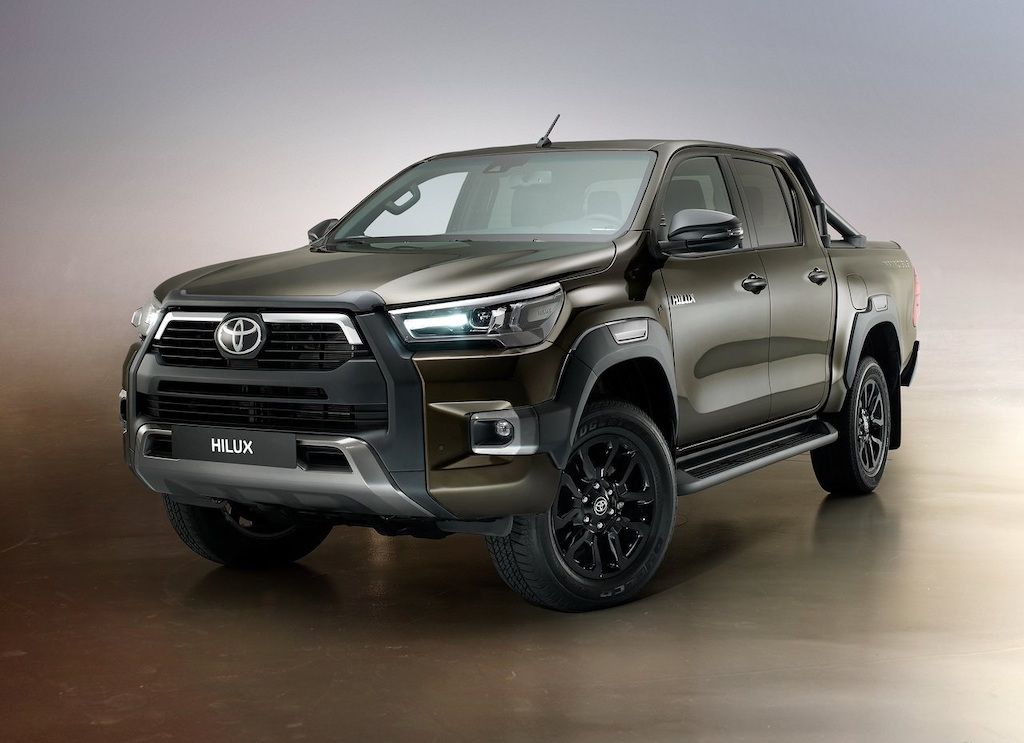
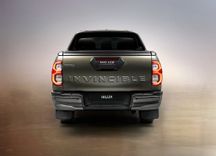
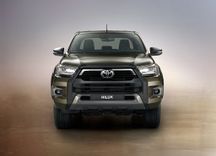
Along with the Fortuner, the Hilux gets a completely new Toyota Tacoma-inspired front end, some mild interior updates, but most importantly, the Hilux gets want it desperately needed – more power.
The Hilux gets a bold new three-dimensional grille and completely new front bumper. Toyota says this gives it far more road presence, whilst reinforcing its tough, robust, go-anywhere credentials. The striking new exterior styling is further enhanced by the availability of newly-designed front and rear LED light clusters, a new black 18" alloy wheel design, and the addition of three new exterior colours - Emotional Red II, Dark Blue, and Oxide Bronze metallic.
Bringing the Hilux up to Ford Raptor levels of output is its new 2.8-litre turbodiesel engine. Whereas the previous version produces 130kw and up to 450nm (in auto guise), the latest version matches the Raptor’s 500nm torque output, and runs in very close with a 150kw power output. This gives the Hilux a 0-100kph sprint time of 10 seconds, while it is capable of an average fuel economy of 7.8 litres per 100kms. The new powertrain will be available in Extra Cab and Double Cab body styles, with a choice of 6-speed manual or 6-speed automatic transmissions mated to 4-wheel drive.
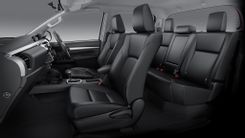
The interior is very subtlety refreshed and gets an updated instrument cluster design, and a new, 8-inch centre console-mounted infotainment screen which adopts mechanical buttons and dials for enhanced operability under all driving conditions. And for the first time, the infotainment system incorporates Apple CarPlay and Android Auto for smartphone integration.
With the new Hilux, engineers sought to improve the bakkie’s on-road comfort and drivability, without compromising its off-road prowess, and this was done through a series of enhancements to the suspension and power steering system. The suspension benefits from front and rear shock absorber tuning, improved leaf spring design, and new bushing to combine a smoother ride with reduced impact on steps and holes.
It still retains its body-on-frame architecture, meaning it is built to endure the most extreme of conditions. The Hilux's already peerless off-road credentials have been further enhanced by a new electronic function replicating the effect of a mechanical LSD (on 2WD models); the lowering of engine speed at idle from 850 to 680rpm and a tuned accelerator response for greater driver control; an updated VSC system; and a new tyre angle monitor. The Hilux's 1-ton payload and 3.5-ton towing capability have now been expanded to all 4-wheel drive body types (Single Cab, Extra Cab, and Double Cab).
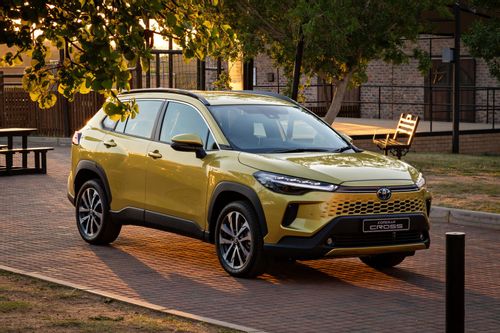
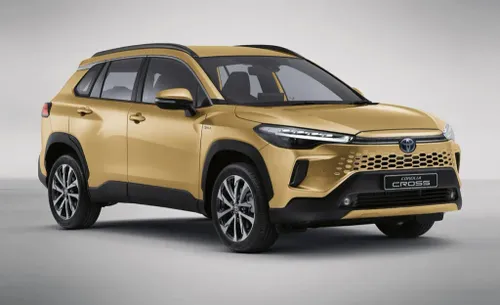
Also worth a look: the Toyota Everest and the Toyota Corolla Cross: Still King of the Crossover Castle?.
FAQ
Q: What does the 2020 Toyota Hilux cost in South Africa?
The 2020 Toyota Hilux starts from around R387,500 for the base Single Cab 2.4 GD-6, while the flagship Double Cab 2.8 GD-6 4x4 automatic will set you back approximately R649,900, making it competitive with the Ford Ranger and Isuzu D-Max in the premium bakkie segment.
Q: How much power does the new 2020 Hilux engine produce?
The upgraded 2.8-litre turbodiesel engine now punches out 150kW of power and 500Nm of torque, which is a significant jump from the previous 130kW and 450Nm, putting it right in Ford Raptor territory for grunt.
Q: Is the 2020 Toyota Hilux worth buying over the Ford Ranger?
The 2020 Hilux is absolutely worth considering thanks to its improved 500Nm torque output, legendary reliability, and Toyota's extensive dealer network across SA, though the Ranger still edges it slightly on ride comfort and interior refinement.
Q: What are the fuel consumption figures for the 2020 Hilux?
Toyota claims the new 2.8-litre Hilux will sip fuel at 7.8 litres per 100km on the combined cycle, which is pretty decent for a bakkie with this much torque, though real-world figures will likely be closer to 9-10 litres per 100km.
Q: Does the 2020 Hilux come with Apple CarPlay and Android Auto?
Yes, for the first time the Hilux gets an 8-inch infotainment system with both Apple CarPlay and Android Auto smartphone integration, plus proper mechanical buttons and dials that actually work when you're wearing work gloves.
Should You Buy It?
The best premium bakkie under R650,000 in SA is still the 2020 Toyota Hilux Double Cab 2.8 GD-6 4x4 automatic at R649,900. With its new 500Nm torque output finally matching the Ford Raptor's grunt, improved styling that doesn't look like a kitchen appliance, and Toyota's bulletproof reliability backed by the country's best dealer network, this Hilux addresses most of the complaints we had about the previous model. Sure, the Ranger Wildtrak still rides better on tar and the Amarok has a superior interior, but when you need a bakkie that'll start every morning for the next 15 years and haul your boat up the Drakensberg without breaking a sweat, the Hilux remains the smart money choice. Just budget an extra R15,000 for a decent bakkie cover and rubber mats, because Toyota's still being stingy with the standard kit.